
What should visitors know before arriving?
Visitors should plan ahead, follow community rules, and treat residents with dignity and independence. A visit should fit the resident’s routine rather than disrupt meals, medication times, rest, or scheduled activities.
Assisted living communities are homes as well as care settings. Each community may have its own visiting hours, sign-in procedures, infection-control policies, and expectations for children or pets. Calling ahead is appropriate, especially if the visit is unplanned or the resident has health concerns.
Before arriving, confirm:
- Whether visitors need to sign in or show identification
- Whether there are limits on the number of guests
- Which common areas are available for visits
- Whether food, flowers, pets, or gifts are permitted
- Whether the resident has a preferred visiting time
- Whether temporary health precautions are in effect
A planned visit is usually more comfortable than an unexpected one. It gives the resident time to prepare and allows staff to explain any current procedures.
How can visitors protect a resident’s privacy?
Visitors should discuss personal matters quietly and avoid asking questions about another resident’s health, finances, family, or daily care. Assisted living communities are shared environments, so private conversations may be overheard more easily than they would be in a private home.
Do not enter another resident’s room, apartment, bathroom, or personal space without permission. Keep doors, drawers, cabinets, and personal belongings undisturbed. A friendly greeting in a hallway is appropriate, but a longer conversation should take place in the resident’s room or a designated common area if the resident agrees.
Photographs and videos require special care. Ask the resident before taking a picture, and do not photograph other residents or staff without their permission. Avoid posting identifying details online, including room numbers, medical information, or descriptions of a resident’s condition.
What is appropriate behavior during a visit?
A good visit is guided by the resident’s comfort, interests, and energy level. Speak directly to the resident, even if staff members are present. Avoid talking about the resident as though they are not in the room.
Helpful conversation may include:
- Family updates and familiar memories
- Favorite music, books, television programs, or hobbies
- Seasonal observations and local events
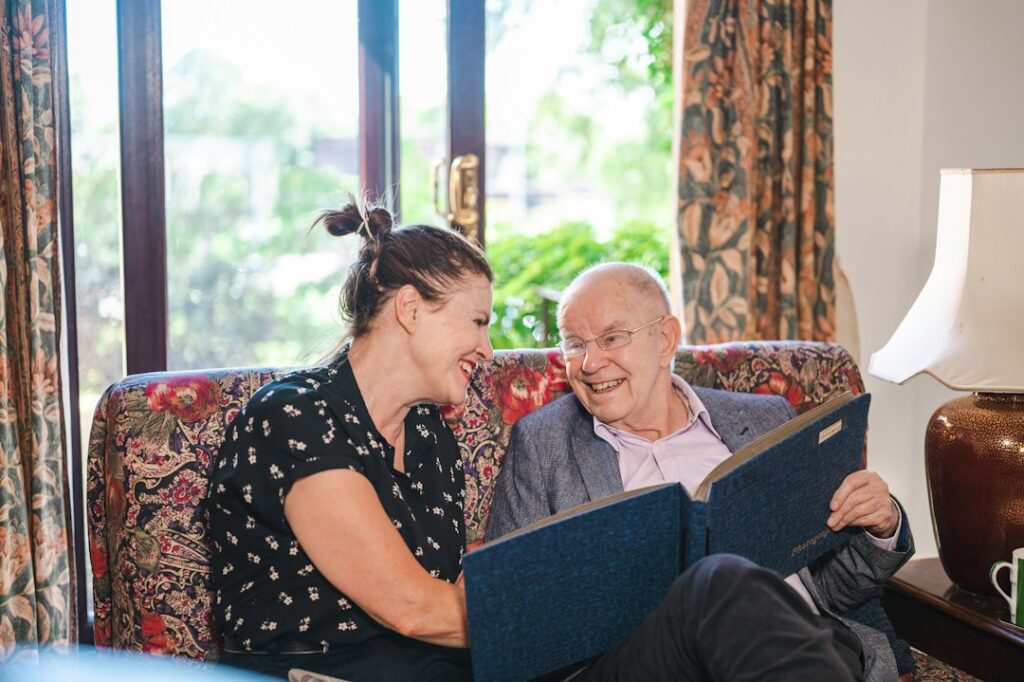
- Photographs, cards, or letters
- Plans for a future visit
Avoid correcting every detail of a story, arguing about memories, or turning the visit into an interrogation. If a resident repeats a question or forgets part of a conversation, respond patiently. Reassurance is often more helpful than pointing out the mistake.
Visitors should also watch for signs that the resident needs a break. Yawning, looking away, becoming unusually quiet, or appearing restless may indicate fatigue. A shorter, calm visit may be more pleasant than staying for a long period.
Should visitors bring food or gifts?
Food and gifts can be thoughtful, but they should be checked in advance. A resident may have dietary restrictions, swallowing concerns, diabetes, allergies, or instructions related to medication. Some foods also require refrigeration or may create a choking risk.
Before bringing something to eat, ask whether it is allowed and whether staff need to review it. Bring only modest portions unless the resident has specifically requested more. Labeling food with the resident’s name and date may be necessary if it will be stored.
Practical gifts are often easier to use than decorative items. Examples include:
- Large-print books or magazines
- Familiar photographs
- Simple puzzles or craft materials
- Comfortable clothing marked with the resident’s name
- Greeting cards
- Battery-operated items when approved by the community
Candles, heating devices, strong fragrances, and clutter-producing decorations may be restricted because of fire safety, allergies, or fall risks. A gift should support the resident’s comfort rather than create extra work or hazards.
How should children and pets behave during visits?

Children can bring energy and connection to a visit, but adults remain responsible for supervising them. Explain beforehand that the community is a home for older adults and that some residents may be resting, confused, or sensitive to loud noise.
Children should:
- Use indoor voices
- Ask before hugging or touching someone
- Stay with the accompanying adult
- Avoid running in hallways
- Leave medical equipment and personal belongings alone
Pets may be welcome under certain conditions, but permission should be confirmed before arrival. Vaccination records, leashes, temperament, cleanliness, and resident allergies may be considered. A calm animal that is comfortable around unfamiliar people is more suitable than a pet that jumps, barks, or becomes anxious.
What should visitors do if a resident seems confused or upset?
Visitors should remain calm, use simple language, and avoid correcting or confronting the resident. Confusion may be related to memory loss, fatigue, illness, medication effects, or an unfamiliar situation.
If the resident believes something inaccurate, arguing may increase distress. Acknowledge the emotion instead of insisting on a factual correction. For example, saying “That sounds upsetting” may be more helpful than repeatedly saying the concern is impossible.
Change the setting if needed. Lower the volume, move to a quieter area, offer a drink if permitted, or shift to a familiar activity. If the resident’s behavior is unusual, severe, or accompanied by physical symptoms, notify staff promptly rather than attempting to manage the situation alone.
Visitors should not give medication, adjust medical equipment, assist with transfers, or provide personal care unless the care team has specifically authorized and instructed them to do so.
Are visits different during winter or severe weather?
Seasonal conditions can affect visiting routines in Altoona. Winter snow, ice, cold temperatures, and changing road conditions may make travel more difficult and may increase the risk of slips near entrances and walkways.
Visitors should allow extra time, wear stable footwear, and avoid tracking excessive moisture into hallways. If travel conditions are unsafe or the community has temporarily restricted visitors because of illness or weather, a phone or video conversation may be a better choice.
Cold-weather clothing should not block a resident’s movement, hearing, or vision. Keep coats, bags, and umbrellas out of walking paths, and ask staff where wet items can be placed.
How can a visitor work respectfully with staff?
Staff members may need to attend to medications, meals, emergencies, or other residents during a visit. A delay does not necessarily mean the resident or visitor has been overlooked. Give staff room to work and avoid interrupting during care tasks unless there is an immediate concern.
Share useful observations in a factual, respectful way. If a resident appears unusually tired, has a new bruise, is not eating, or seems distressed, tell the appropriate staff member privately. Avoid discussing concerns in front of other residents or visitors.
Family members and friends may have different expectations about care, communication, and visiting. Keeping conversations respectful helps protect the resident from unnecessary tension. The resident’s preferences should remain central whenever they can express them.
What if a visit is not going well?
A visit can be shortened without being a failure. Residents may be tired, uncomfortable, confused, or simply not in the mood for company. Asking, “Would you like to rest now?” gives the resident a respectful choice.
If in-person visits are difficult, connection can continue through brief phone calls, handwritten notes, familiar music, shared photographs, or scheduled video conversations. Consistent, manageable contact is often more meaningful than occasional visits that are exhausting.
The most considerate visitor is not necessarily the one who stays the longest. Respect for privacy, comfort, routine, and personal choice is what makes a visit supportive.
